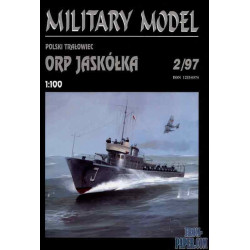
The "Batory" cutter was built by engineer Aleksander Polirala. Built in Modlin Shipyard in 1931-32. Launched on April 23, 1932. Acceptance tests took place in the Bay of Gdańsk. Just a year after entering service, the ship was returned for recycling. Severely corroding aluminum hull cladding sheets have been replaced with steel ones. The breakwater has been replaced by a steel bulwark. The ship served in the Border Guard and caught smugglers. As soon as the war began, all Border Guard vessels were mobilized and concentrated in the fishing port of Hel. "Batory" participated in the defense of the peninsula against German air raids. After Hel's capitulation, "Batory" sailed from the port on the night of October 1, 1939 and headed for Sweden. The German ship "Grille" began to chase it, but the cutter managed to sneak into Swedish territorial waters. "Batory" was interned in the port of Klintenhamn. In November the ship moved to a permanent anchorage in Vaxholm, where Polish submarines and the sailing ship "Dar Pomorza" were already stationed. In August 1945 the ship was escorted back to Poland. After repairs, it was included in the composition of the Polish Navy. Served in Szczecin Sea Region, Odra Delta and Szczecin Bay. At that time, the name of the ship was changed to "Hel". Later, the names were changed to "November 7", "Dzierzynski" and "KP-1". In 1957, "KP-1" was removed from the lists of the Navy and transferred to the League of Friends of Soldiers. After repair and renovation, served as a training and rescue ship of the Warsaw KDL Maritime Club. After the renaming of the KDL to the National Defense League (Liga Obrony Kraju), the ship became the flagship of the Warszaw LOK Water Training Center and served in the Zegzyn Bay. In 1969, KP-1 "Batory" was deleted from the service lists. In 1973 it became a ship - monument in the port of Hel. In 2009 the ship was restored and is now an exhibit of the Naval Museum in Gdynia.
A simple but well-designed and fairly detailed model of a small ship, suitable even for beginners and less experienced modellers working under the supervision of a more experienced colleague. The publication is equipped with laser-cut frame and other thickening details from cardboard of the required thickness, which will significantly facilitate your work and improve the appearance of the future model.